Basta! in English - page 2

When Prisons, Inmates and Detention Policies Become Investment Products

More than a third of prisons in France are partly run by private companies. The trend towards privatising the prison system, which began three decades ago, is gaining in momentum. A handful of companies are capitalising on this very lucrative market, providing services that include catering, receiving visitors, building detention facilities and organising prison labour. The French state spends almost six billion euros a year on these services even though the benefits of private management are highly questionable. This rampant privatization trend raises another thorny question: do private companies not have an interest in keeping prisons full?

By Rachel Knaebel

In France, a retirement co-op ensures seniors are not treated as commodities

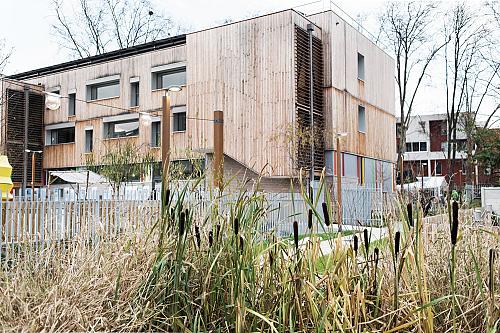
They didn’t want to end up in a traditional retirement home. They wanted to remain the actors in their own lives. Seven years after their first discussions about how to age well, a group of retired people is starting to build the first co-op for the aging. Non-speculation, democracy and environmental concern are the foundations of the “Chamarel-Les Barges” project, located in a neighborhood of Vaulx-en-Velin, east of Lyon, France. The project is so inspiring that the bank has even conferred a 50-year loan to the founders, who are in their 60s.

By Sophie Chapelle

What if Tomorrow Your Insurance Company Controlled Your Lifestyle?

Our personal information is targeted not only by benevolent or malevolent espionage agencies. Insurance companies have launched a real race in attempting to collect as much information as possible about your lifestyle. Social networks, the “Internet of Things” [a proposed development of the internet in which everyday objects have network connectivity, allowing them to send and receive data] and leisure applications on smartphones are sources of information about the state of your health and diet - and a gold mine for evaluating the risks insurance companies and cooperatives would run - as well as about the premium you should pay. In the future, will your insurer dictate the way you have to live in order for you to pay less?

By Morgane Remy

In Europe, Are the Chemical Industry’s Interests Taking Precedence Over People’s Lives?

The European Union has still not regulated usage of endocrine disruptors, chemical substances with colossal health impacts utilized in many common consumer products. Yet endocrine disruptors are the source of many disorders: birth defects, cancers and obesity. This regulatory delay, which has just been condemned by the European justice system, owes nothing to accident. The chemical industries - manufacturers of pesticides and plastics - are lobbying intensively and hamper any serious regulatory advances. Journalist Stéphane Horel deciphers what is going on in her book, Poisoning, the Lobby and Its Objectives. We interview her below.

By Nolwenn Weiler

How to recognize a truly alternative, ethical and socially useful bank

It’s time to switch bank: ethical banks are on the rise throughout Europe. But how do you pick the right one? Three of the five largest banks in France are cooperatives, but this doesn’t necessarily mean they avoid speculative and toxic financial activities more associated with conventional banks. Fortunately, a new type of cooperative bank is making headway. With a truly democratic governance and socially useful lending practices, Nef and Crédit coopératif are changing the French banking landscape. Could ethical banks become the new face of finance?

By Rachel Knaebel

How multinationals use climate change to impose an industrial agricultural model

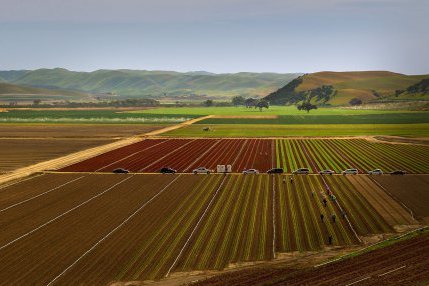
Governments are keeping an eye on the agricultural sector’s greenhouse gas emissions. A new concept is emerging: “climate-smart agriculture,” with the objective of producing more, better. In the arena of climate negotiations, multinational corporations are getting set to promote “smart fertilizers” and plants genetically modified for heat tolerance. While industrial agriculture is about to win the battle with organic agriculture, researchers and nongovernmental organizations (NGOs) are trying to overturn the deal.

By Sophie Chapelle

In Bangladesh, Rana Plaza Survivors Set Up Own Cooperative

The Rana Plaza disaster in Bangladesh killed 1,135 people and left thousands more injured, prompting corporate garment giants to up their commitments and establish codes of conduct and ethical charters. Hundreds of inspections followed, resulting in the closure of a number of garment factories due to unacceptable working conditions. A group of forty garment workers traumatised by the disaster, decided to change tack and create their own garment cooperative – Oporajeo, which means invincible in Bengali. But European clients seeking alternative suppliers are few and far between, and the cooperative is having trouble getting enough work. Report from Dhaka.

By Axelle de Russé, Elsa Fayner

Neither protectionism nor neoliberalism but “open relocalization”, the basis for a new International

Will they call for a return to protectionism? Try to regulate the markets? Attempt to rein in unemployment by prioritizing economic growth, regardless of the cost? The Left seems to have run out of ideas for social and economic initiatives that are at once sound, liberating, and environmentally sustainable. Faced with such lack of vision, calls to “relocalize” the economy start to look appealing. But what we need is open and altruistic relocalization, the kind that, unlike worrisome and dangerous tendencies toward insularity, can actually “reestablish the right balance of efficiency, power, well-being, autonomy and conviviality.”

By Anisabel Veillot, Christophe Ondet, Stéphane Madelaine, Vincent Liegey

Are Climate Advocates not Welcome in France for COP21?

The French government is set to reintroduce border controls for a month, over the period of the International Climate Conference in Paris. This exceptional measure is taken “where there is a serious threat to public policy or internal security”. It appears that civil society, which is planning on mass mobilisation for the event, is especially targeted, as a number of delegations from developing countries are having trouble getting visas.

By Sophie Chapelle